Dr. Karen Kunz, Associate Professor Emerita, West Virginia University and co-author of the Cost of Congress (www.thecostofcongress.com), specializes in innovative policy analysis and solution development for non-profit and state executive and legislative programs…read more….
The art of public policy analysis
innovative & solution-oriented
Comprehensive, data-driven, systems analyses to inform policymaking.
Translation of complex financial and economic data into innovative, actionable insights to guide fiscal planning and strategic decision making.
Development of adaptive capacity to effectively and efficiently anticipate and respond to today’s complex issues.
Everything is Connected
With the new year comes a new blog!
Each month a new essay will explore how fiscal federalism plays out in practice – and the ways it doesn’t. Public dollars pay for federal, state and local government services that are interconnected through funding mechanisms but are siloed in operation, delivery, and assessment.
The articles use a systems analysis approach to illustrate how public dollars move across systems — labor markets, social programs, defense, infrastructure, research, land use, and finance — and how decisions made in one place routinely shift costs, risks, and responsibilities elsewhere. A core focus of the project is adaptive capacity: the ability of public institutions to integrate information across agencies and levels of government, evaluate downstream effects, adjust policies over time, and respond holistically rather than reactively. Where adaptive capacity is weak, governments struggle to learn from outcomes, anticipate spillover effects, or align resources and responsiveness with evolving public needs.
When applicable, links to monthly essays will be included here. I will look forward to your thoughts about the topics and research included.
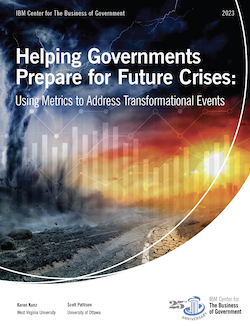
Tracking how public dollars are spent and the effectiveness of those choices is especially important for state governments now as federal budgets include substantial reductions in federal transfer dollars. Funding cuts extend to agencies such as FEMA, which is particularly significant as hurricane, drought and wild fire seasons are approaching. What states learned from the COVID pandemic and their uses of federal stimulus dollars can provide insights into how they might best allocate scarce resources or reallocate spending priorities . These reports for IBM illustrate the value of performance measures in preparing for and addressing transformational events.
Congress allocated more federal funds to the pandemic recovery than any other national emergency. Government officials of both parties and at all levels were both unsure of the extent of the pandemic impacts and very concerned about a potential economic collapse. ARPA, passed in 2021, allocated money to state, local, and tribal governments to mitigate the significant medical and economic impacts of the pandemic. Within that Act, the CSLFRF allocated $195 billion to be divided among states and the District of Columbia. In addition, counties and municipalities shared $100.7 billion; tribal governments were eligible for a total of $20 billion; and territories and non-entitlement units of local government split $24 billion.
States used these federal recovery funds to replenish lost revenue, address negative economic impacts, and improve program outcomes in the wake of this transformational event. These allocations came with strings attached but did not include substantive enforcement mechanisms. Consequently, despite the provisions, in large part states could spend the money as they choose. They were required, however, to develop and report performance metrics for spending to measured increased jobs and meet other limited criteria.
This report examines the ways in which a shock to the system of this magnitude—a once in one lifetime global pandemic—impacted state governments’ ability to use emergency dollars for public services, and the extent of their success in managing the impacts of this extraordinary experience.
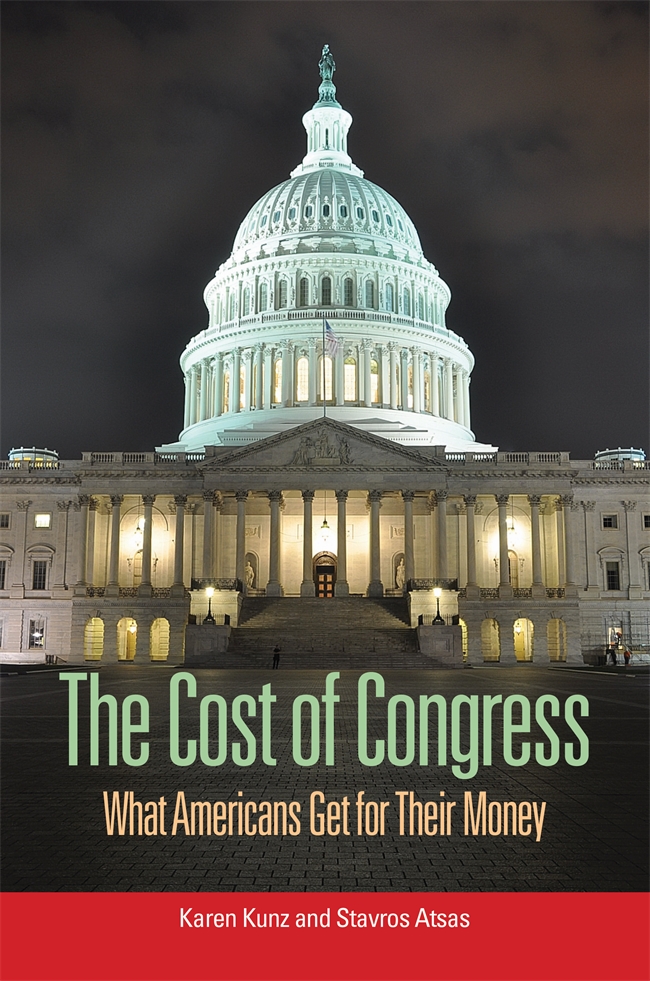
Ever think about what it costs to keep the lights on in Congress? About how much we pay our Representative and Senators and how much time they actually spend working for us – creating policies and overseeing departments, overseeing and agencies to make sure they are operating the way Congress envisioned – vs. their donors and lobbyists? Or how many bills they introduce and, of those, how many actually make it into law? Who collects and maintains records of everything they do, preserves historical photos and materials, and maintains the offices and meeting rooms and ensures that they have a secure workplace? What does all this cost American taxpayers (you and I)?
“…Unlike the other departments and agencies that receive federal funds every year, Congress controls its own checkbook. The House Committee on Appropriations and its Senate counterpart, the Senate Committee on Appropriations, each contain a Legislative Branch Appropriation subcommittee; those subcommittees are responsible for compiling the spending plan for their respective chambers each year. In addition to funding the House and Senate, these Legislative Branch appropriations also include annual fiscal support for all the Legislative Branch partners.
While the House and Senate essentially ask themselves for their yearly allowance, members must also play to public perception when putting together their budgets. For example, they are entitled to annual cost-of-living adjustments and pay raises; however, they have consistently waived any and all salary increases throughout the last decade. It’s just with the 2019–2020 request that pay raises were actually included (unsuccessfully) in the Legislative Branch budget request.
Budget requests of Executive Branch agencies are scrutinized in detail and revised by the Congress. However, Congress establishes its own budget, sets its own staff levels, pay scales, allowances, etc. In large part this is done by adoption of simple resolutions or committee edict [that are] not subject to review or approval by the Executive [Branch]. Moreover, the methods by which these perquisites of office are provided often permit Members of Congress greater flexibility and discretion in the use of appropriated funds than is granted to other Federal agencies.[i]
In addition to controlling how much it gets, it controls when it gets paid. So, it should come as no surprise that Congress gets its money first. Since 1995, Congress has passed the Legislative Branch Appropriation before the start of each new fiscal year, unlike the 11 other federal spending bills (e.g., Defense, Agriculture, or Energy appropriations) which have not passed before the start of the coming fiscal year in decades. This means that even through government shutdowns, Congress and its support partners are fully funded.[ii]
We now know that Congress determines how much money it needs to do its job every year, but what, exactly, is that job? We know they pass laws (when they can actually agree on them), but their roles and responsibilities encompass much more.
Scholars and experts have studied and written about the Constitutional aspects of Congress’s responsibilities for generations. Our founding fathers designed a three-part system of government, comprising the Executive, Legislative, and Judicial Branches, to provide checks and balances that would ensure that no one branch would be able to overpower the others. Yet, they also recognized the supremacy of the Congress; in fact, the Constitution starts right off with the Legislative Branch. Article I decrees that “Congress has the primary power to make the country’s laws.”[iii] It then provides the framework for the two chambers that make up our Congress: the House of Republicans and the Senate.
Over the years Congress’s roles and responsibilities have changed, both formally and informally. These modifications have systematically altered the structures and procedures of committee functions and legislative processes, including the filibuster and earmarking, hearings and investigations. Legislative partners have also come and gone, as seen in the birth of the Congressional Budget Office, the controversial expansion of the Botanical Garden, and the demise of the Office of Science and Technology. Others, such as the Congressional Research Service, the Government Accountability and Printing Offices, the Botanical Garden, the Library of Congress, and the Architect of the Capitol have been stalwart partners through the years.” – from the Introduction of the book

 kunz consulting