Management
PERFORMANCE METRICS FOR CATASTROPHIC EVENTS
Kunz, K. & Pattison, S. 2023. Helping Governments Prepare for Future Crises: Using Metrics to Address Transformational Events. IBM Center for Business of Government. The Future Shocks Initiative. https://www.businessofgovernment.org/report/helping-governments-prepare-future-crises.
Cost, Quality, and Agency Capacity (book chapter)
There is no real consensus within the literature on a holistic understanding of capacity within public or private organizations. Meanings, contexts, approaches, and applications of the term vary. Even when used within a specific context or approach, such as within public administration or public policy, perception and usage of the term varies. This chapter explores the broad ideas around the term as discussed in the literature, and identifies commonalities and distinctions, both in meaning and methodology. This provides a foundation for a concentrated focus on organizationalcapacity in the context of public administration. Empirical examples within federal and state government are offered to illustrate varying ways in which capacity is considered and the underlying importance of the concept in application, particularly in relation to concepts of effectiveness and efficiency. The chapter ends with an outlook on notions and implications for future study and implementation in ways that will enhance positive contributions to and shared perceptions of public organizations….
Kunz, K., 2024. Cost, Quality, and Agency Capacity in Public Service Delivery, in Handbook of Public Service Delivery, Reddick & Hatcher, Eds. Cheltenham, UK: Edward Elgar Publishing.
enhancing government payment integrity: leveraging AI and other emerging technologies
This report for the IBM Center for the Business of Government outlines a proactive, AI-driven approach to reducing improper payments in government benefit and payment systems. Improper payments—fraud, waste, abuse—cost U.S. federal agencies over $2.7 trillion over two decades, with $236 billion in FY 2023 alone. Traditional “pay and chase” models are increasingly inadequate against evolving fraud tactics. The report draws on a November 2024 expert roundtable with federal agency leaders, congressional staff, industry, and academics to map challenges, opportunities, and solutions.
Hoehne, F. & Kunz, K. 2025. Enhancing Government Payment Integrity: Leveraging AI and Other Emerging Technologies, IBM Center for the Business of Government.
Women in Leadership
Helen Holt: A centenarian’s perspective on a lifetime of servant leadership
Women have made great strides in the past 100 years. As the iconic cigarette commercial told us almost 50 years ago, “You’ve come a long way, baby!” Yet women are still underrepresented in the highest leadership ranks, including state and federal office. Before being asked to “lean in” or share valuable insights, a small group of very capable women were leaders long before those two words were seen in the same sentence. One such remarkable woman, Helen Holt, was a “servant-leader” throughout her illustrious and inspiring career….
Kunz, K. & L. De-Frank Cole. 2015. Helen Holt: A centenarian’s perspective on a lifetime of servant leadership. Public Administration Review, 75(6), pp. 80-8.
Engaging women in public leadership in west virginia
This article focuses on the engagement of women in public leadership in West Virginia. Topics discussed include the effort of U.S. Senator Hillary Rodham Clinton to educate women on the importance of participation in public service project, the role of women in politics, and the numbers of women representatives in the U.S….
Kunz, K. & Staton, C. 2013. Public Voices, 13(2), pp. 64-88.
Congressional Spending
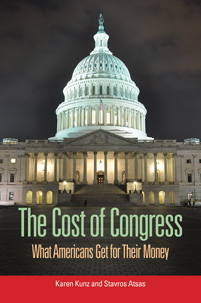
The Cost of Congress
What started as a simply inquiry into how Congress used taxpayers funds to support its constitutional obligations and support partners turned into a preliminary study, funded by the Dirksen Congressional Center and presented at the Midwest Political Science Association 2015 Conference in Chicago. That spanned a more in-depth examination of 40-years of spending on the Legislative Branch by the Legislative Branch. The presentation and book illustrate Congress’s constitutional responsibilities: the spending – aka Appropriations – and revenue raising _ Ways & Means – processes, committee structures and work, how a bill becomes a law, and confirmations and treaties. In addition, they illustrate the roles and importance of the legislative partners.
Earmarks
Funding infrastructure has long been a challenge for state and local governments. For many years, Congressionally directed spending, aka earmarks, were a coveted way to bridge that gap, literally and figuratively. Earmarks were essential for the sustained livelihood of many communities as roads, bridges and other essential infrastructure kept communities connected to each other and the broader public. Officially, earmarks were discontineud by the House in 2005, which in reality meant that they were no longer reported as required (half of all earmarks were never reported dispute the law) – directed spending happened through phone, email, and otter communication exchanges. More recently, earmarks have enjoyed a comeback. but the official sanction remains.
Earmarks funded a lot more than infrastructure, including firetrucks, ambulances and local clinics, domestic abuse shelters, after-school programs, water system upgrades and towers, and many other essential needs. Overall, however, more than half of all earmarks supported defense programs, with Alaska, Hawaii and West Virginia receiving the lion’s share of those allocations.
The Increasing Use of Federal Earmarks to Fund State and Local Infrastructure
Kunz, K. 2009. The increasing use of earmarks to fund local infrastructure: A case study of Illinois municipal government. Municipal Finance Journal, 30, (3), pp. 29-51.
The Importance of Earmarks to State Coffers: An Examination of Distribution Trends over the Decade
Kunz, K. & O’Leary, S. 2012. The importance of federal earmarks to states coffers: an examination of distribution trends over the decade. Journal of Public Budgeting, Accounting and Financial Management, 4 (24), pp. 569-608.
Earmarks Fuel West Virginia Economic Development Spending
O’Leary, S. & Kunz, K. 2011. Earmarks Fuel West Virginia Economic Development Spending. Public Affairs Reporter, 27 (1), pp. 2-9.

